Japan-Canada Summit Meeting (Summary)
March 6, 2026

[Provisional translation]
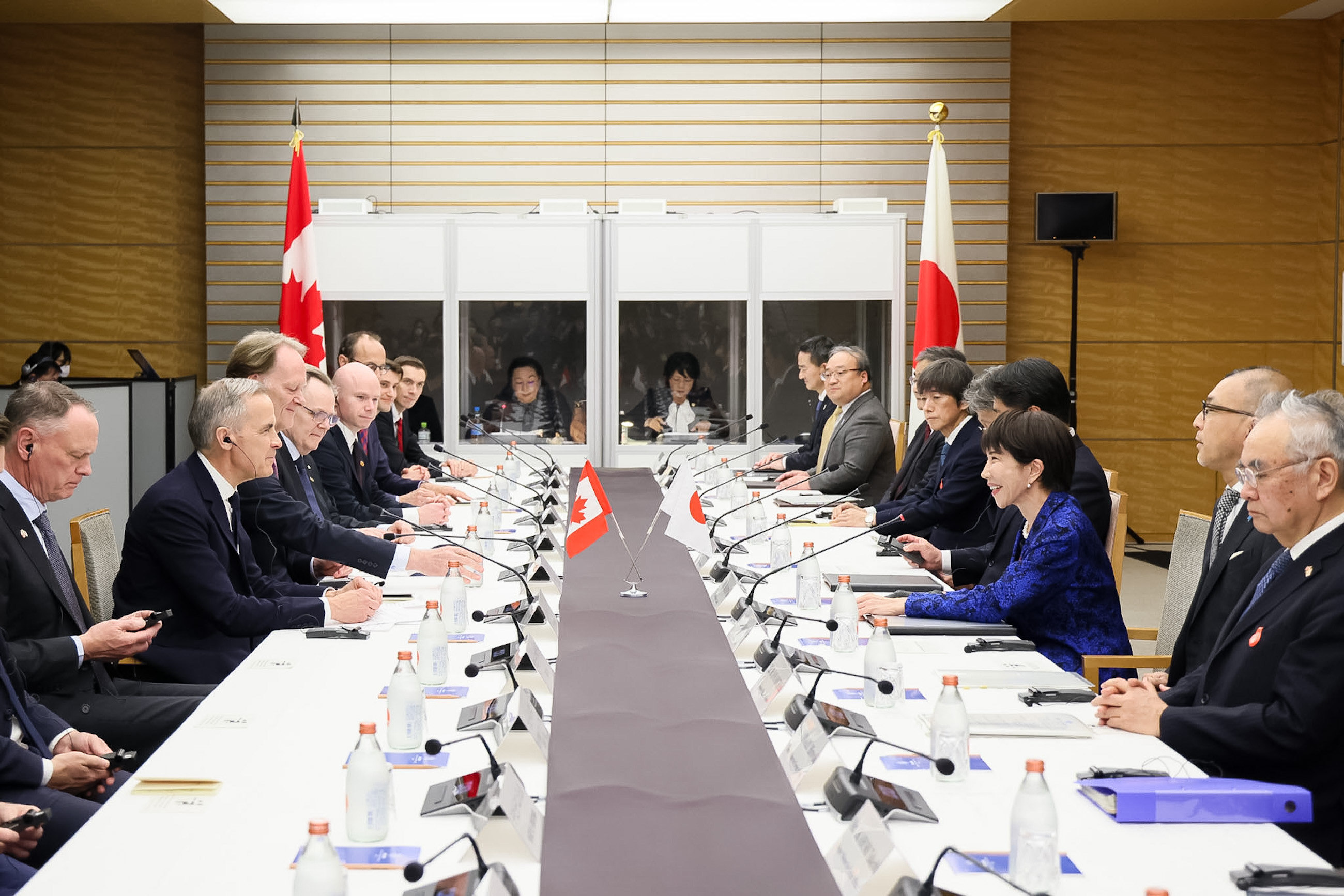
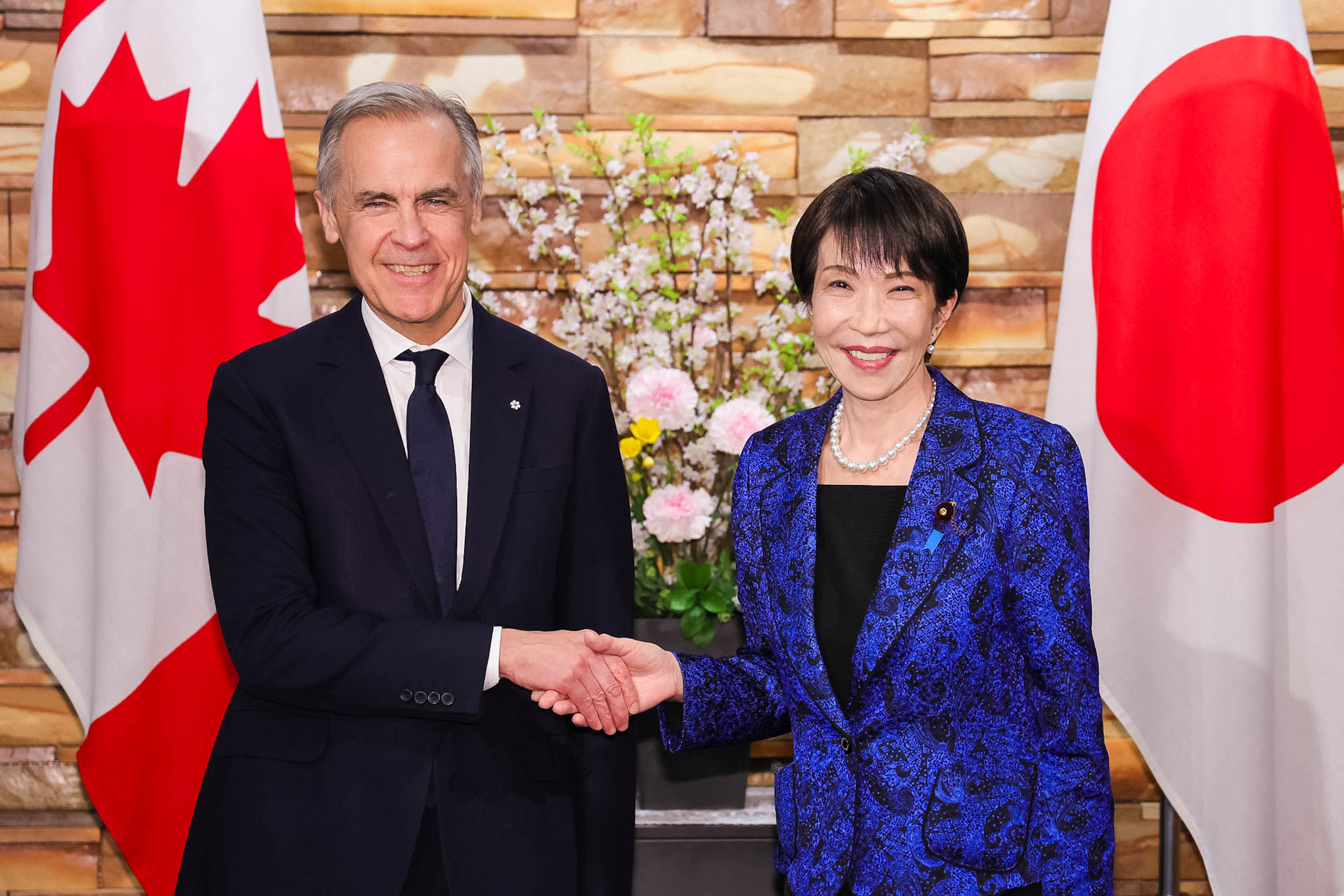
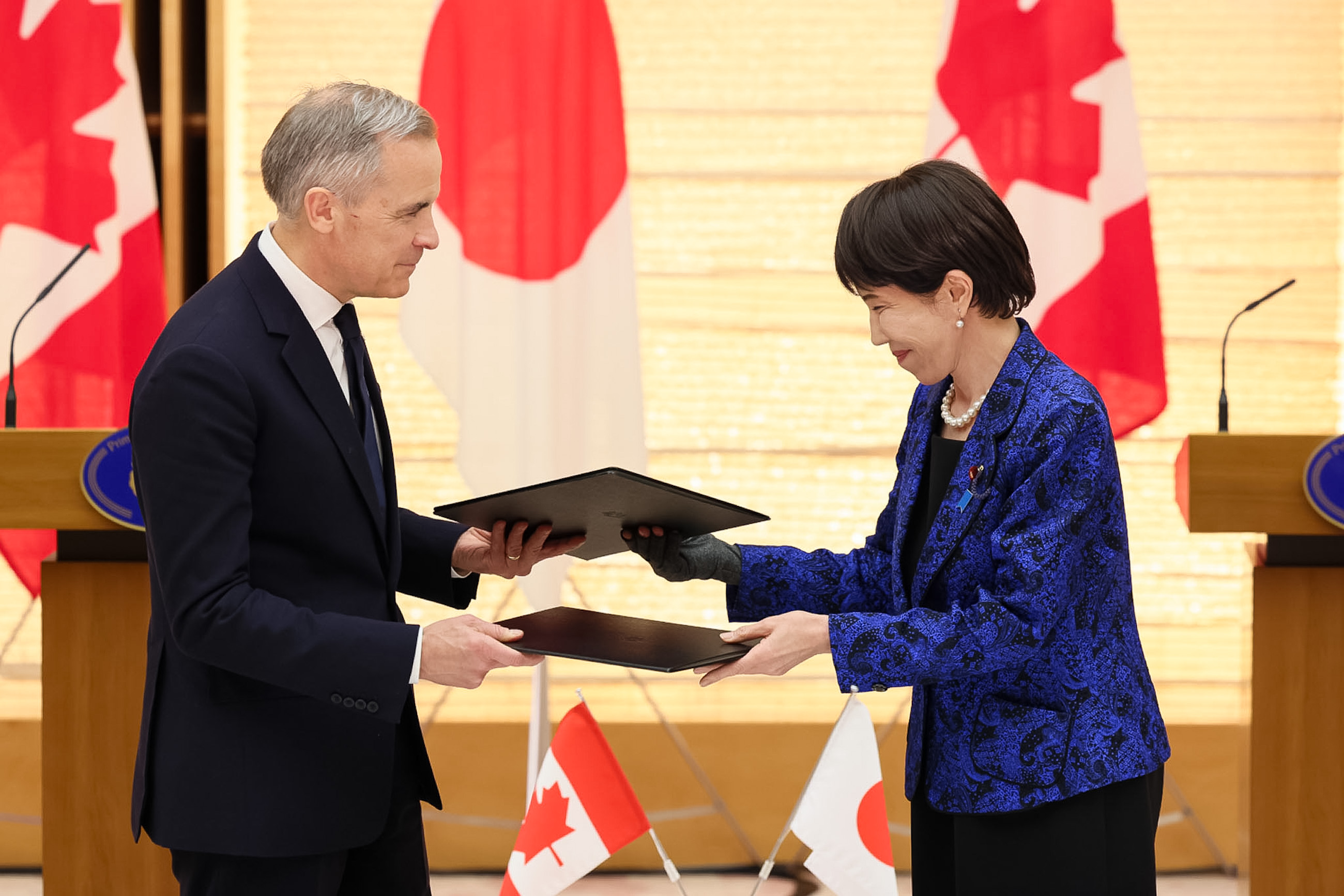
On March 6, commencing at 7:15 p.m. for approximately 25 minutes, Ms. TAKAICHI Sanae, Prime Minister of Japan, held a summit meeting with the Right Honourable Mark Carney, Prime Minister of Canada, who is on an Official Working Visit to Japan. Following the meeting, the two leaders took part in the signing ceremony of the Japan-Canada Joint Statement, gave a joint press announcement, and attended a working dinner for 75 minutes. The overview of the meeting is as follows:
1. Overview
(1) The two leaders concurred on elevating Japan-Canada relations to a “Comprehensive Strategic Partnership”, in light of the expanding cooperative relationship between Japan and Canada across all fields, such as security, economy including economic security, cultural and people-to-people exchanges.
(1) The two leaders concurred on elevating Japan-Canada relations to a “Comprehensive Strategic Partnership”, in light of the expanding cooperative relationship between Japan and Canada across all fields, such as security, economy including economic security, cultural and people-to-people exchanges.
(2) Prior to the working dinner, the two leaders signed the Japan-Canada Joint Statement. This joint statement is the first summit document between the two countries to comprehensively determine the strategic direction for both Japan and Canada to pursue.
(3) Furthermore, the two leaders concurred on further expanding the wide range of people-to-people exchanges between Japan and Canada, looking ahead to the milestone of the 100th anniversary of the establishment of diplomatic relations between Japan and Canada in 2028, as well as the future relationship between the two countries.
2. Japan-Canada Relations
(1) Prime Minister TAKAICHI mentioned the importance of Canada as a partner that shares fundamental values and principles such as freedom, democracy, and the rule of law and as a reliable like-minded partner who plays a vital role in promoting a Free and Open Indo-Pacific (FOIP), amid the rapid changes in the international situations, including an increasingly severe security environment, rapid advancements in cutting-edge technologies, and intensifying technological competition.
(2) On the security front, the two leaders concurred on further strengthening and developing Japan-Canada security cooperation, including the further expansion of joint exercises, taking into account the development of legal infrastracure such as the Agreement on the Security of Information and the Agreement concerning the Transfer of Defense Equipment and Technology They also concurred on establishing a Cyber Policy Dialogue to promote cooperation in new domains such as cyber.
(3) The two leaders concurred on further strengthening information sharing in peacetime and mutual cooperation in times of crises, taking into account the Memorandum of Cooperation on Assisting Japanese and Canadian Nationals Abroad that was recently signed.
(4) The two leaders welcomed the recent signing of three memoranda on maritime cooperation in response to the deepening of the collaboration between the two countries in areas contributing to maritime security, such as measures against illegal, unreported, and unregulated (IUU) fishing.
(5) On the economic front, Prime Minister TAKAICHI welcomed the concrete progress in the energy sector, including the start of the production of LNG Canada for Asia and the commencement of the construction of Small Modular Reactor (SMR) in Ontario. The two leaders also concurred on newly establishing an Economic Security Dialogue and on promoting initiatives on battery supply chains, as well as advanced technology and innovation fields such as AI and quantum technology.
(6) The two leaders concurred on strengthening cooperation in enhancing supply chain resilience, including cooperation on critical minerals, amid growing international concerns over export restrictions on critical minerals and other resources.
3. Regional and International Affairs
(1) The two leaders confirmed their continued cooperation toward the realization of FOIP.
(1) The two leaders confirmed their continued cooperation toward the realization of FOIP.
(2) The two leaders exchanged views on the current situation in the Indo-Pacific, such as their policies toward China, and confirmed that Japan and Canada will continue to work closely together in addressing various issues of the international community.
(3) Prime Minister TAKAICHI stated that Japan condemns Iran's actions, given that Iranian attacks have extended to diplomatic facilities as well as civilian facilities in neighboring countries and that Iran has closed the Strait of Hormuz, resulting in damage including in surrounding waters. Prime Minister Carney in turn explained Canada’s position and efforts on the matter. The two leaders concurred on closely working together toward the early settlement of the situation.

