


[Provisional Translation]
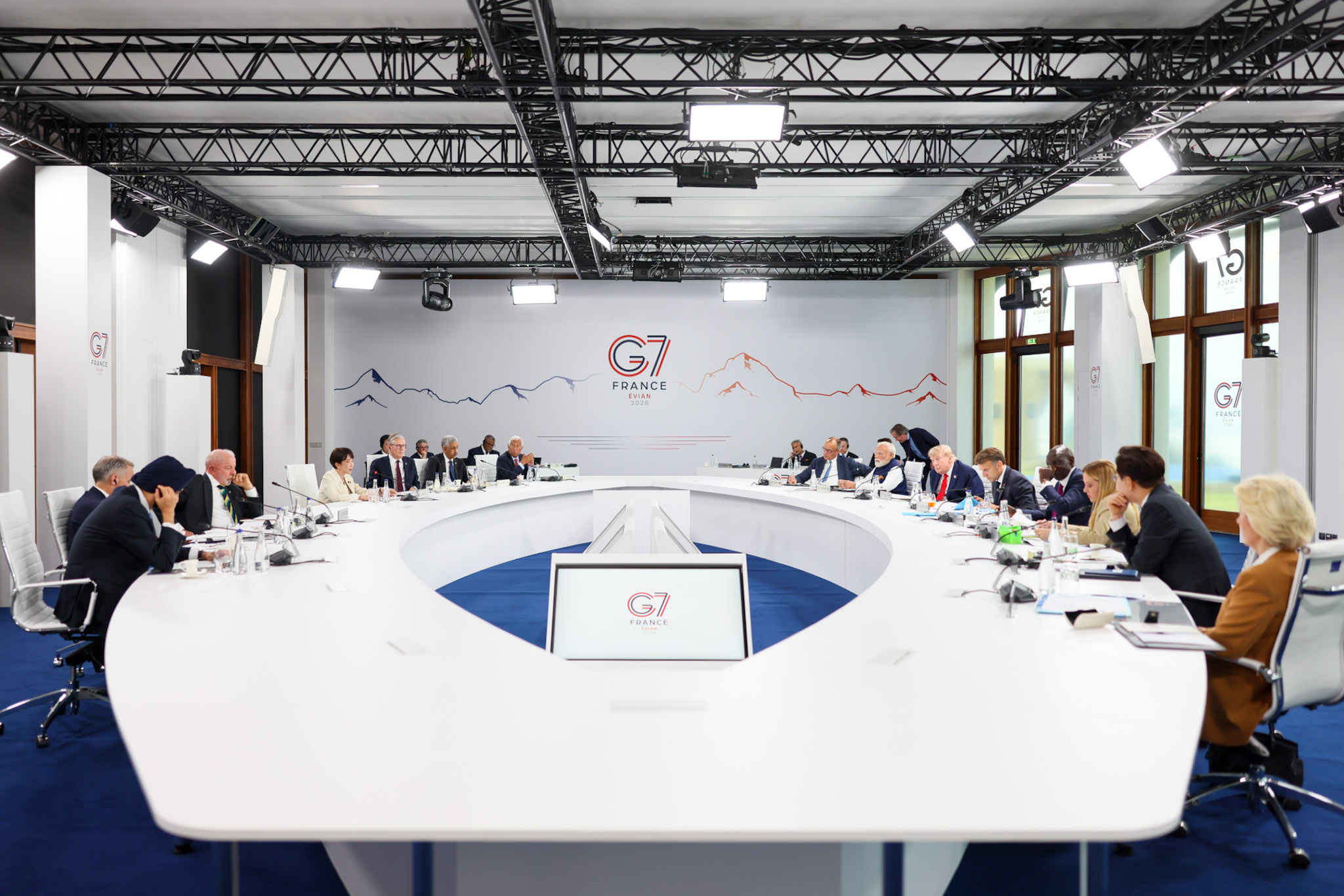
On June 16, commencing at 3:15 p.m. local time. (10:15 p.m. on June 16, Japan time.) for approximately 105 minutes, Ms. TAKAICHI Sanae, Prime Minister of Japan, attended the G7 Evian Summit Working Session on “Forging New Partnerships and Rebuilding International Solidarity”. The overview of the session is as follows.
1. Prime Minister TAKAICHI stated that self-reliant development driven by ownership of partner countries is key in achieving quality growth, and that Japan has consistently stood by partner countries, including in Southeast Asia and Africa, and has led development cooperation supporting their self-reliant development for approximately 70 years. For example, in Kenya, Japan has supported infrastructure development at Mombasa Port, the gateway to East Africa, thereby helping to support self-reliant development. Japan has also supported strengthening infectious disease research and countermeasures at the Kenya Medical Research Institute (KEMRI), which now plays a central role in infectious disease control as a leading institution for infectious disease research in East Africa as well as serving as a regional training hub.
2. Prime Minister TAKAICHI expressed her appreciation and support for President Trump’s leadership in strengthening a coordinated response to the Ebola outbreak. Japan attaches great importance to universal health coverage (UHC), and the UHC Knowledge Hub launched in Tokyo last year has provided training to strengthen health financing for countries including Egypt and Kenya. Japan plans to convene the UHC High-Level Forum 2026 in December of this year.
3. Prime Minister TAKAICHI stated that Japan will continue to work with the G7 and like-minded countries to advance these efforts; that emerging donors should, as responsible donors, jointly comply with international rules and standards and promote fair and transparent development finance; that all G20 members should participate in efforts to address future debt issues, including the World Bank’s Data-Sharing Exercise between creditor and debtor countries, and discuss approaches to debt treatments for middle-income countries; and that it is important to diversify development finance by mobilizing domestic resources and private capital. Prime Minister TAKAICHI noted that Japan hosted the Tax and Development Conference in Tokyo in March.
4. Prime Minister TAKAICHI stated that this year marks the 10th anniversary since Japan first announced the vision of a Free and Open Indo-Pacific (FOIP). Under the updated FOIP, Japan seeks to expand cooperation to enhance the autonomy and resilience of the Indo-Pacific region and to achieve shared strength and prosperity by leveraging a full range of instruments, including the Official Development Assistance (ODA), as well as private-sector financing.
5. Prime Minister TAKAICHI expressed her grave concern that China’s measures against Japan could adversely affect the supply chains of the G7 and other like-minded countries. Prime Minister TAKAICHI emphasized the need to work with G7, like-minded countries, and international organizations, to strengthen the resilience of critical mineral supply chains, and underscored the importance of enhancing support for mineral-producing developing countries through Multilateral Development Banks (MDBs). Japan, together with the G7 and other like-minded countries, will further promote the World Bank Group’s Resilient and Inclusive Supply chain Enhancement (RISE) Partnership and cooperate with other MDBs such as the Asian Development Bank (ADB) and the Inter-American Development Bank (IDB). Prime Minister TAKAICHI also stated Japan’s intention to cooperate on strengthening technology controls.