


[Provisional Translation]
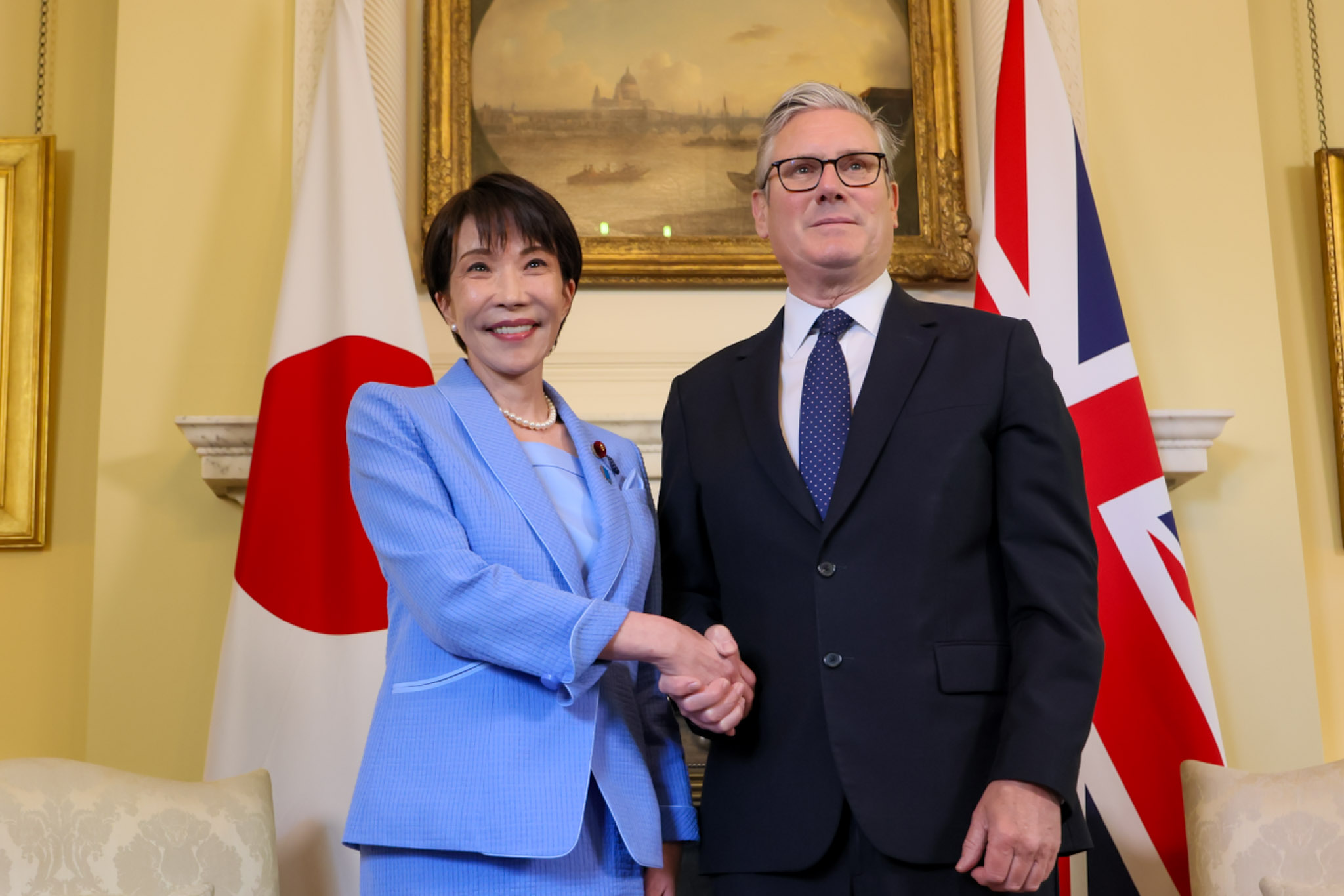
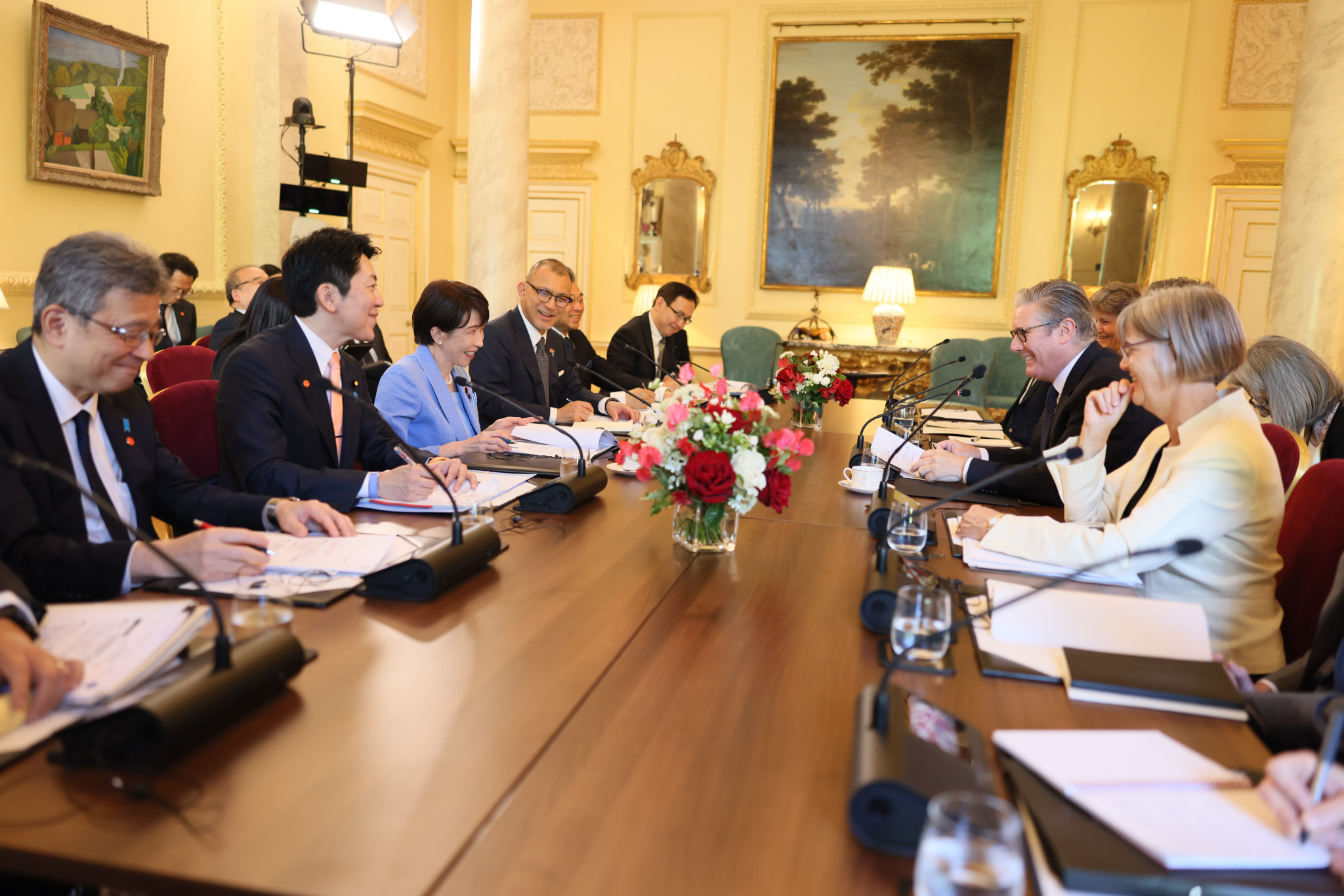
On June 14, commencing at 11:00 a.m. local time (7:00 p.m. on June 14, Japan time) for approximately 2 hours and 40 minutes, Ms. TAKAICHI Sanae, Prime Minister of Japan, who is visiting London, United Kingdom, held a summit meeting with The Rt Hon Keir Starmer, Prime Minister of the United Kingdom of Great Britain and Northern Ireland, and attended a working lunch. The beginning part of the summit meeting was held as a small group meeting for approximately 25 minutes. The two leaders also attended a business roundtable.
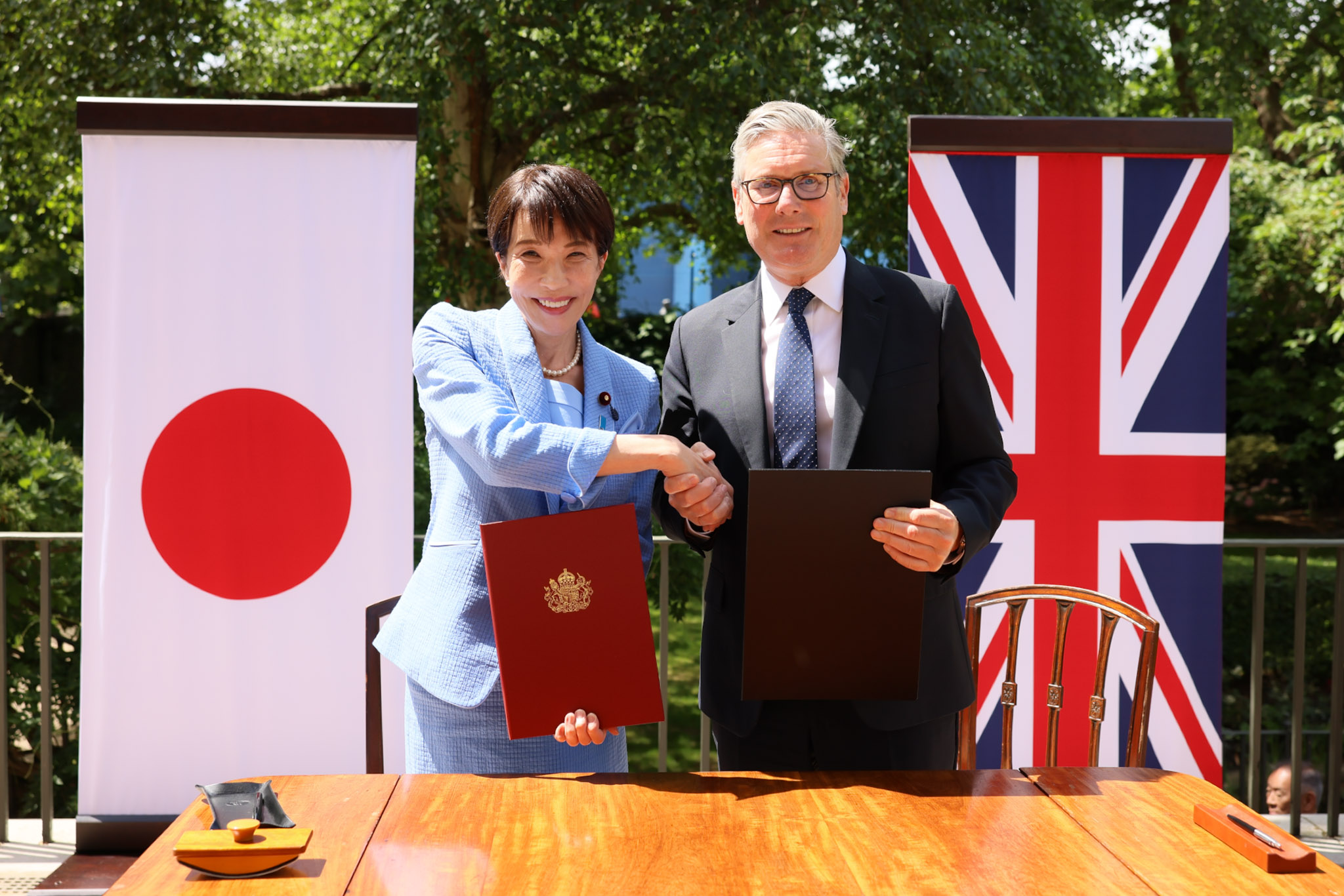
Taking this opportunity, the two leaders issued the "Japan-UK Leaders' Joint Declaration on Economic Security Cooperation" and the "Japan-UK Frontier Technology Partnership." In addition, memoranda of cooperation were signed and exchanged between relevant institutions and companies of both countries.
1. Opening Remarks
(1) At the outset, Prime Minister Starmer welcomed Prime Minister TAKAICHI's visit to the United Kingdom, and stated he is pleased with the close bilateral cooperation in technology and business, as well as defence and defence industry, also reaffirming the joint commitments to GCAP, which is of strategic importance to both countries.
(2) In response, Prime Minister TAKAICHI stated that Japan and the UK, as an "Enhanced Global Strategic Partner" that share strategic recognition including the inseparability of the security of the Indo-Pacific and the Euro-Atlantic, hold a firm determination to contributing together to the peace and stability in the international community, and are highly important like-minded countries that have been advancing pioneering cooperation in fields such as security, and have reached a level that could even be described as ‘quasi-allies.’
2. Bilateral Relations
(1) The two leaders shared serious concerns regarding export restrictions on critical minerals and other materials that could affect global supply chains, and welcomed the "Japan-UK Leaders' Joint Declaration on Economic Security Cooperation" issued on this occasion. On the basis of this declaration, the two leaders concurred on deepening bilateral cooperation in the field of economic security, including the diversification and strengthening of supply chains.
(3) The two leaders shared the recognition that energy security is an urgent global challenge facing the world. Prime Minister TAKAICHI highlighted Japan's efforts to advance cooperation through "POWERR Asia," a framework for strengthening energy resilience in Asia launched in April this year. The two leaders also discussed actions that the G7 should take to enhance energy resilience.
(4) The two leaders welcomed concrete outcomes including the launch of a cooperation framework and technical cooperation in the field of offshore wind; cooperation in the nuclear field such as high-temperature gas-cooled reactors and fusion energy; the strengthening of innovation cooperation through the establishment of a Japan-UK coordinated funding scheme; mutual cooperation in the semiconductor field; and coordination to enhance cybersecurity measures, among others.
(5) The two leaders welcomed the issuance of the "Japan-UK Frontier Technology Partnership" and concurred on advancing initiatives between Japan and the UK in the field of advanced technology. From this perspective, the two leaders welcomed the strengthening of cooperation in the fields of innovation, science and technology research, AI, semiconductors, and cybersecurity, as well as the launch of a Japan-UK joint call for research proposals for Beyond 5G/6G.
(6) The two leaders concurred on accelerating the joint development of the next-generation fighter aircraft under the Global Combat Air Programme (GCAP), through supporting the signing of the next contract between the international organization GIGO and the joint venture Edgewing by the end of June. The two leaders also welcomed the launch of the Defence Capability and Industrial Council and expressed their expectation that, through this Council, Japan-UK security cooperation and defence industry cooperation would be further strengthened.
(7) The two leaders confirmed that they would continue to be strongly committed to upholding the rules of the CPTPP, CEPA, and the WTO, and that they would cooperate to strengthen their mutual industrial competitiveness. In this regard, Prime Minister TAKAICHI expressed concern over the UK's tariff measures to be imposed on Japan's steel products.
3. Regional Affairs
(1) The two leaders exchanged views on the situation in the Indo-Pacific, including China and their policies toward North Korea, and confirmed that Japan and the UK would continue to work in close coordination.
(2) With regard to the situation in Ukraine, the two leaders concurred that they would continue to work closely together towards the realization of a just and lasting peace in Ukraine.
(3) With regard to the situation surrounding Iran, the two leaders exchanged views on the current situation regarding the US-Iran talks, confirmed the importance of ensuring free and safe navigation through the Strait of Hormuz, and concurred on continuing to work tenaciously, in coordination with the international community, to make necessary diplomatic efforts in coordination with the international community toward the early de-escalation of the situation.