FII PRIORITY Asia Summit 2025 in Tokyo
December 1, 2025




-
If you can not view the video, click here
[Provisional translation]
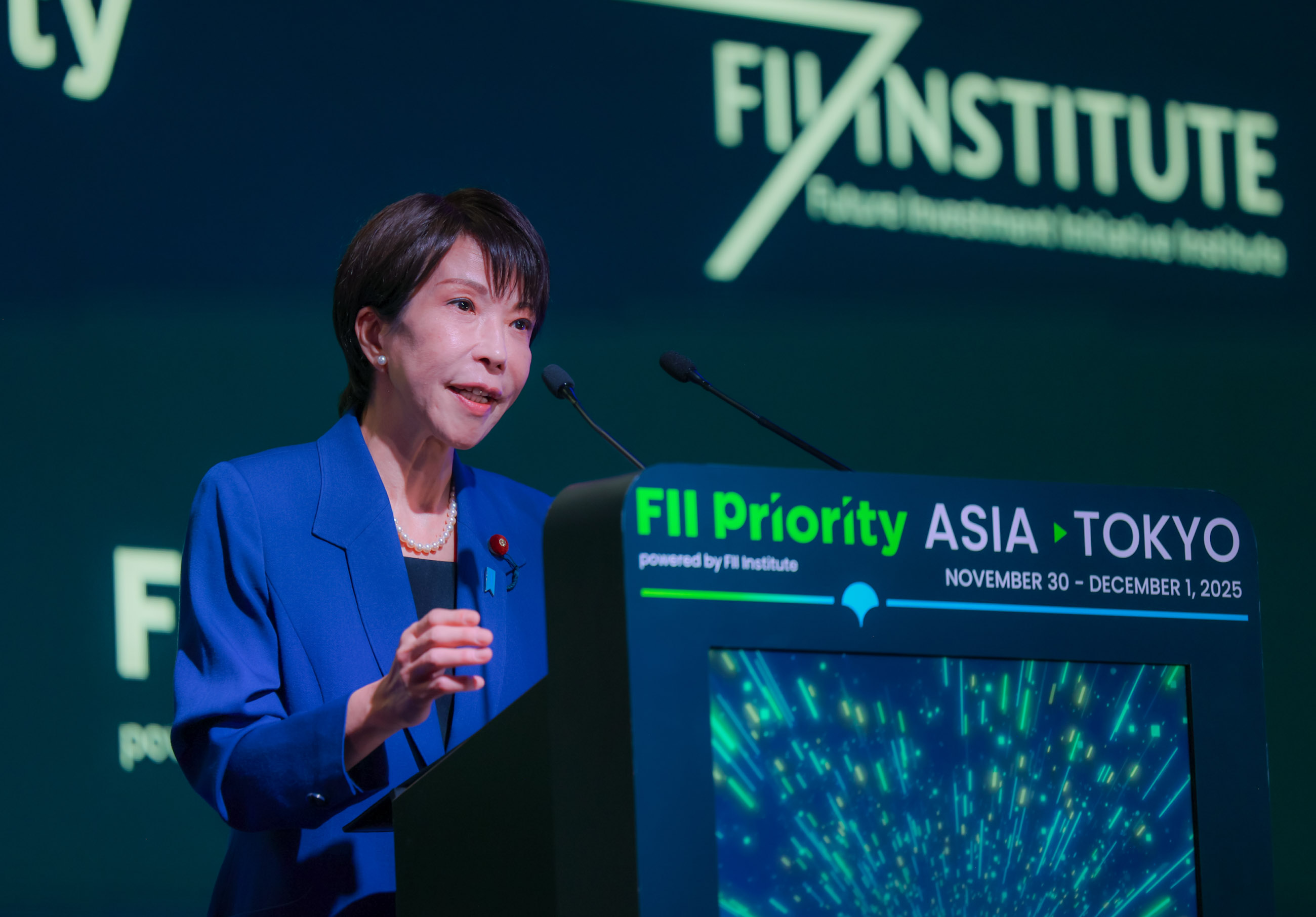
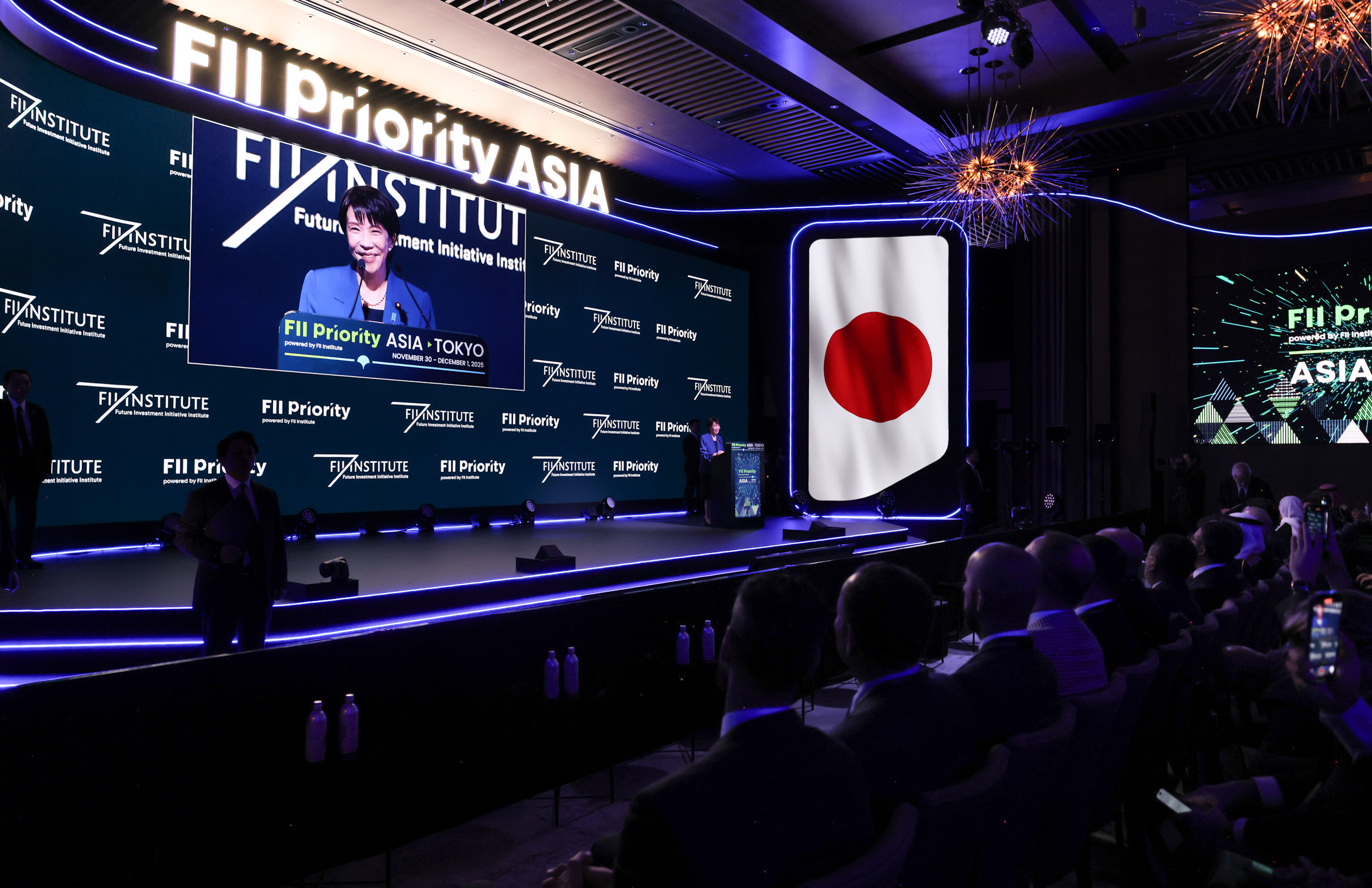
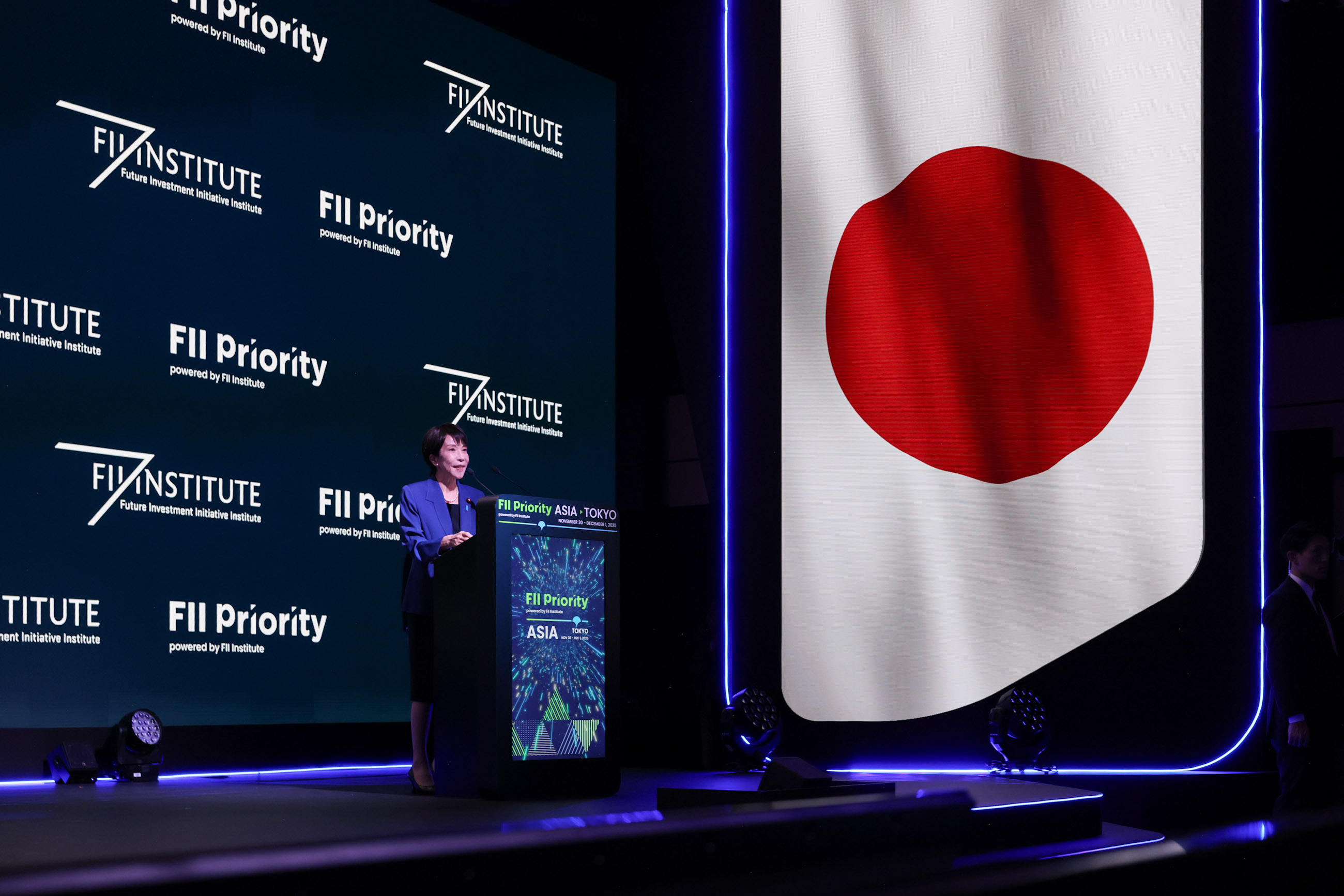
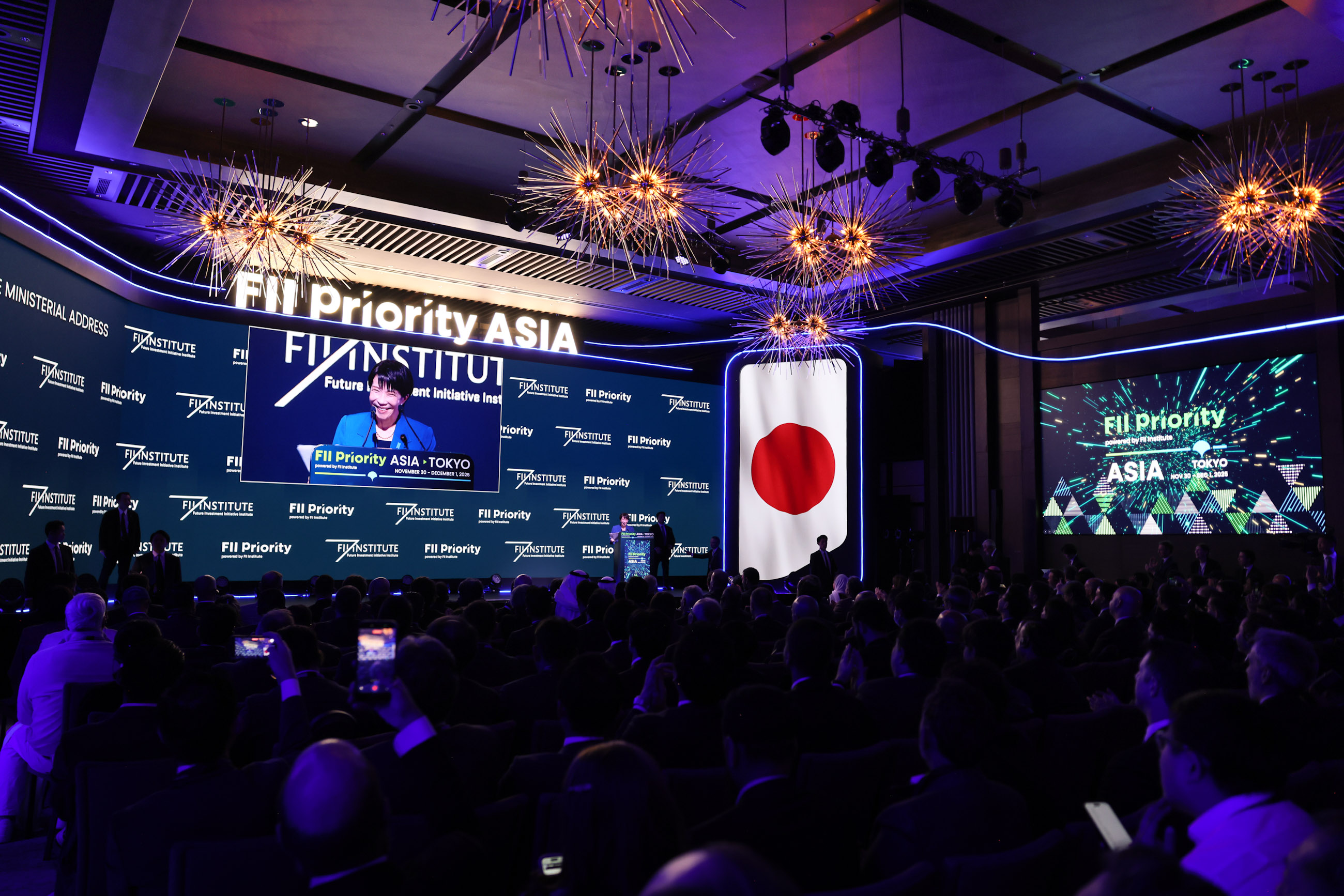
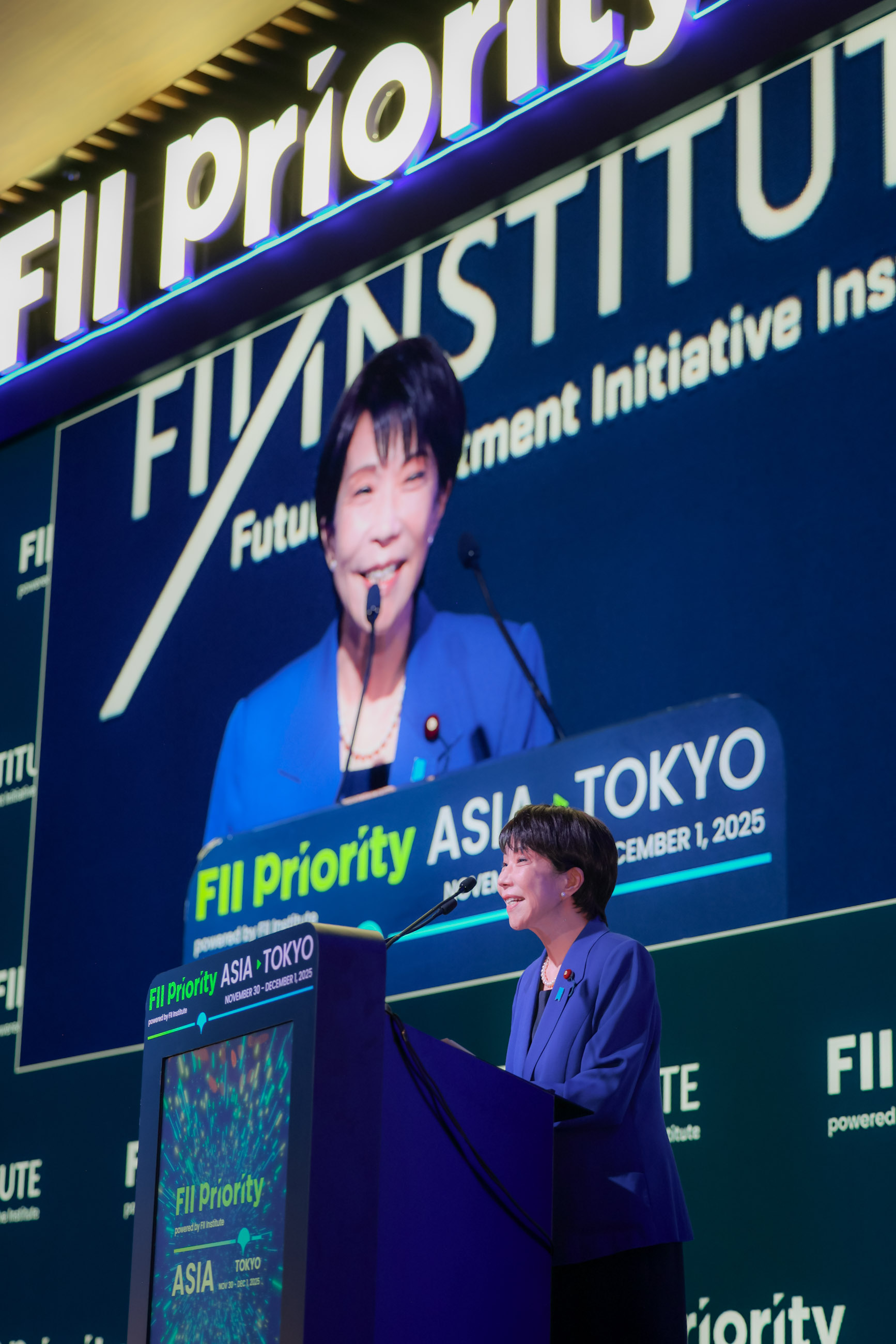
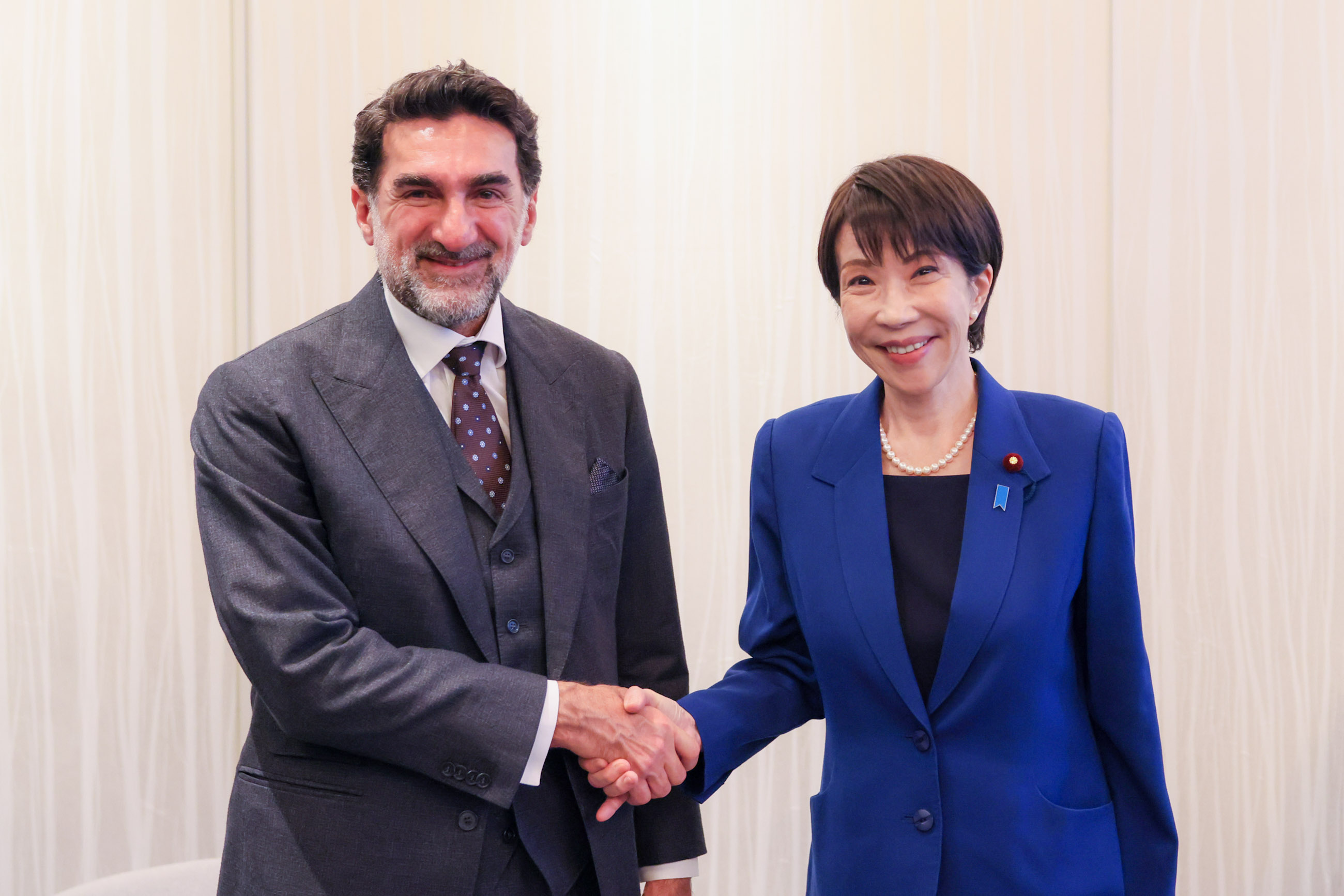
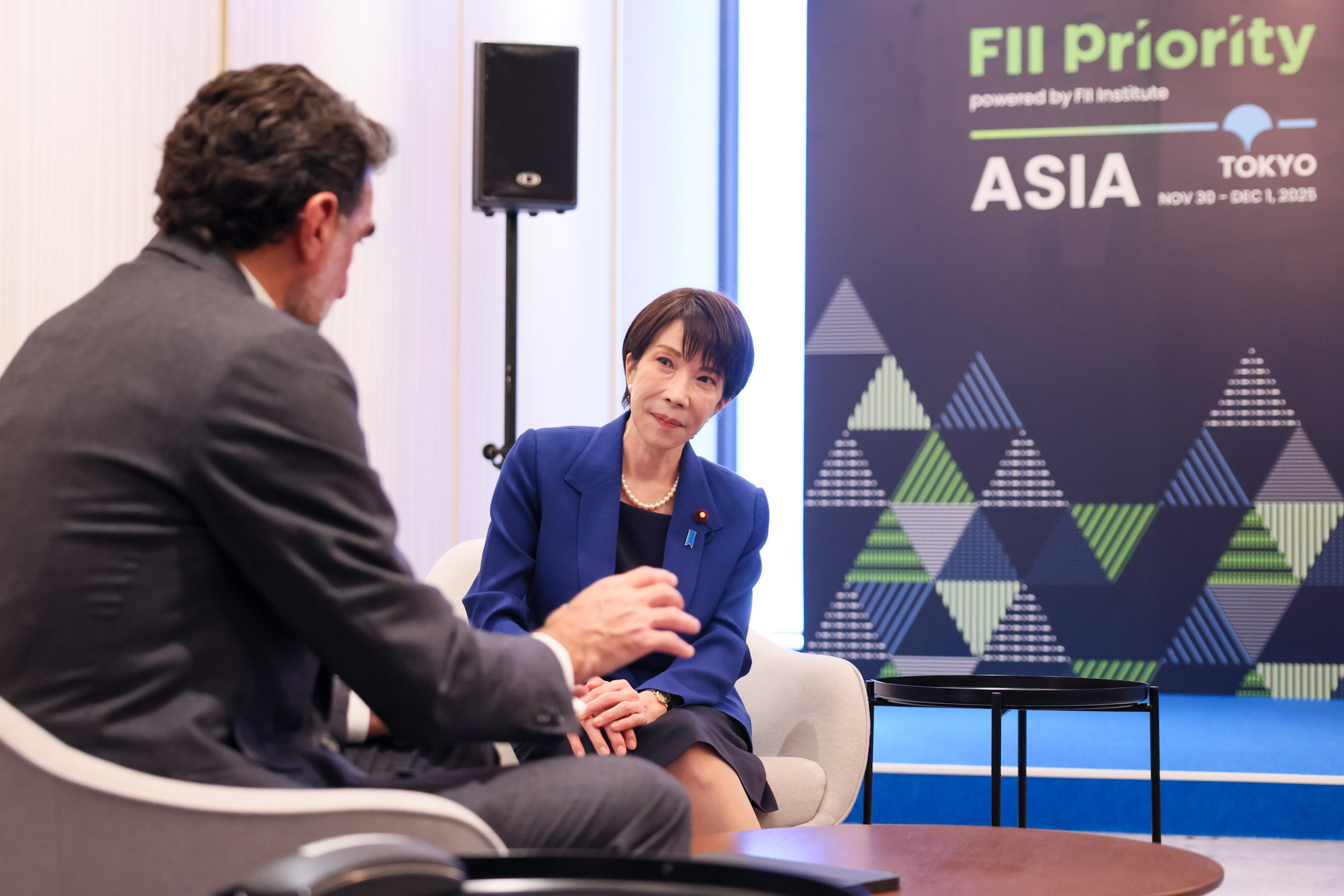
On December 1, 2025, Prime Minister Takaichi attended the FII PRIORITY Asia Summit 2025 in Tokyo.
The Prime Minister said in her address and the Q&A session:
[Address]
“Assalamu Alaikum. Good morning, distinguished participants. Konnichiwa. I am TAKAICHI Sanae, Prime Minister of Japan. On behalf of the Government of Japan, I am very pleased to deliver an address at the FII Priority Asia Summit in Tokyo, the first of its kind in Asia, in this milestone year marking the 70th anniversary of the establishment of diplomatic relations between Japan and Saudi Arabia.
The Takaichi Cabinet regards strategic investments that enhance resilience against potential crises as the cornerstone of economic growth. These are strategic investments undertaken proactively through public-private collaboration to address various risks and societal challenges in the fields of economic security, food security, energy security, healthcare security, and strengthening national resilience. This is in line with investments in future generations advocated by the FII (Future Investment Initiative). Providing products, services, and infrastructure that contribute to solving global challenges will further drive growth for Japan. We have designated 17 strategic fields, including AI (artificial intelligence), semiconductors, shipbuilding, quantum technology, biotechnology, aerospace, and cybersecurity. By implementing comprehensive support measures from multiple perspectives such as the promotion of bold investments, support for global expansion, development of human resources, promotion of startups, research and development, industry-academia collaboration, establishment of international standards, and other programs, we will attract proactive investments from both public and private sectors. In addition, we will incorporate measures that will create and expand new demand, including defense and other government procurement and regulatory reforms. We will also bolster private investments through measures that enhance investment predictability, such as commitments to multi-year budget allocations. Through these measures, we will strengthen the supply structure of the Japanese economy. By realizing an economy that inspires confidence in global investors, we will create a virtuous cycle where global capital flows into Japan.
Turning our gaze to the world, the free, open, and stable international order we have become familiar with is being profoundly shaken by historic shifts in the balance of power and intensifying geopolitical competition. Since taking office, I have worked vigorously on summit diplomacy throughout the past month, including the ASEAN (Association of Southeast Asian Nations)-related summit meetings, Japan-U.S. summit meeting, APEC (Asia-Pacific Economic Cooperation) leaders’ meeting, and the G20 summit. We will strive to realize Japanese diplomacy that flourishes at the center of the world. We intend to work closely together with Saudi Arabia and other like-minded countries around the globe, to maintain and strengthen a free and open international order based on the rule of law, and to rebuild responsible global governance.
Under these global circumstances, Japan also finds itself in the most severe and complex security environment since the end of World War II. Our National Security Strategy positions safeguarding our national interests, including not only Japan’s peace and security, but also economic prosperity, as “economic security”. Supply chain issues are particularly critical. The pursuit of economic efficiency and the advancement of international division of labor have led to increasingly diversified and complex supply chains. This has resulted in the overdependence on other countries for critical materials, resulting in supply risks. For the members of the business community here today, supply chain risks have become an issue directly impacting corporate value. The Government of Japan will further strengthen measures to enhance the resilience of supply chains, including revitalizing shipbuilding capacity that underpins international shipping and establishing alternative supply routes for rare earths and other critical minerals. We will boldly proceed with strategic investments that enhance resilience against potential crises and achieve robust economic growth, while ensuring economic security at an earlier stage and with greater assurance. At the same time, we will accelerate initiatives to promote supply chain coordination between companies from like-minded nations, such as Japan and Saudi Arabia.
I understand Japanese manga and anime are very popular in Saudi Arabia, including Captain Tsubasa, ONE PIECE, and Demon Slayer. But today, I would like to conclude my speech by borrowing a famous line from Attack on Titan: ‘Just shut your mouths. And invest everything in me!!’ I believe you all understand what I am asking for. Japan is back. Invest in Japan. Thank you very much for your kind attention.”
[Q&A session]
Mr. Richard Attias, FII Institute: I think that many in this room, especially those considering investing in Japan, are greatly encouraged by Prime Minister Takaichi’s strategies to build a strong economy. However, markets remain concerned about the Takaichi administration’s expansionary fiscal policy. Could you share your thoughts?
PM Takaichi: First, let me state our assessment of Japan’s current fiscal situation. We should not interpret this excessive inflation as leading to substantial debt reduction. Sustained growth in wages and productivity has restored nominal growth rates, leading to record high tax revenues. Meanwhile, backed by the current account surplus and solid foundation of domestic savings, the debt-to-GDP (gross domestic product) ratio is now declining. The latest comprehensive economic measures to realize a strong economy are based on this improving trend. While prioritizing strategic investments that enhance resilience against potential crises and growth investments, we have firmly ensured that the total adjusted government bond issuance for the full year, which combines the initial and supplementary budgets, will be reduced compared to the previous fiscal year. Going forward, we will remain attentive to interest rate developments and other trends in our fiscal management.
In this way, the Takaichi Cabinet aims to enhance the growth potential of the Japanese economy and to strengthen both domestic and international confidence in Japan’s fiscal health. Under the principle of responsible and proactive fiscal policy, we will pursue strategic fiscal spending that enables us to build a strong economy while steadily improving our debt indicators.
Mr. Attias: How will you deal with the current situation where investment and real wage growth remain insufficient despite robust performance of Japanese companies?
PM Takaichi: It is important for companies to utilize management resources, such as savings and deposits, for investment in human capital and research and development for new businesses so that they can achieve sustainable growth. To this end, we have commenced discussions toward revising Japan’s Corporate Governance Code. We will hold constructive dialogue with investors and advance corporate governance reforms to realize a strong economy.
Furthermore, last week, we also held an exchange of views among the government, labor, and management. To ensure that wage increases of over five percent, the highest level reached in more than 30 years, take firm hold, we requested cooperation from the business community to achieve wage increases comparable to the levels over the last two years, especially focusing on achieving base pay raises that keep pace with inflation.
In addition, with regard to work style reform, I instructed the Minister of Health, Labour and Welfare and other relevant ministers to discuss the relaxation of working time regulations on the premise that employees’ mental and physical health is protected and their individual choices are respected.
In this way, the Takaichi Cabinet will vigorously implement the necessary measures under the principle that the government’s role is not to simply pass the burden of achieving wage increases exceeding inflation onto businesses, but to create an environment that enables businesses to raise wages on a sustainable basis.”
