WebX 2025
August 25, 2025


[Provisional translation]
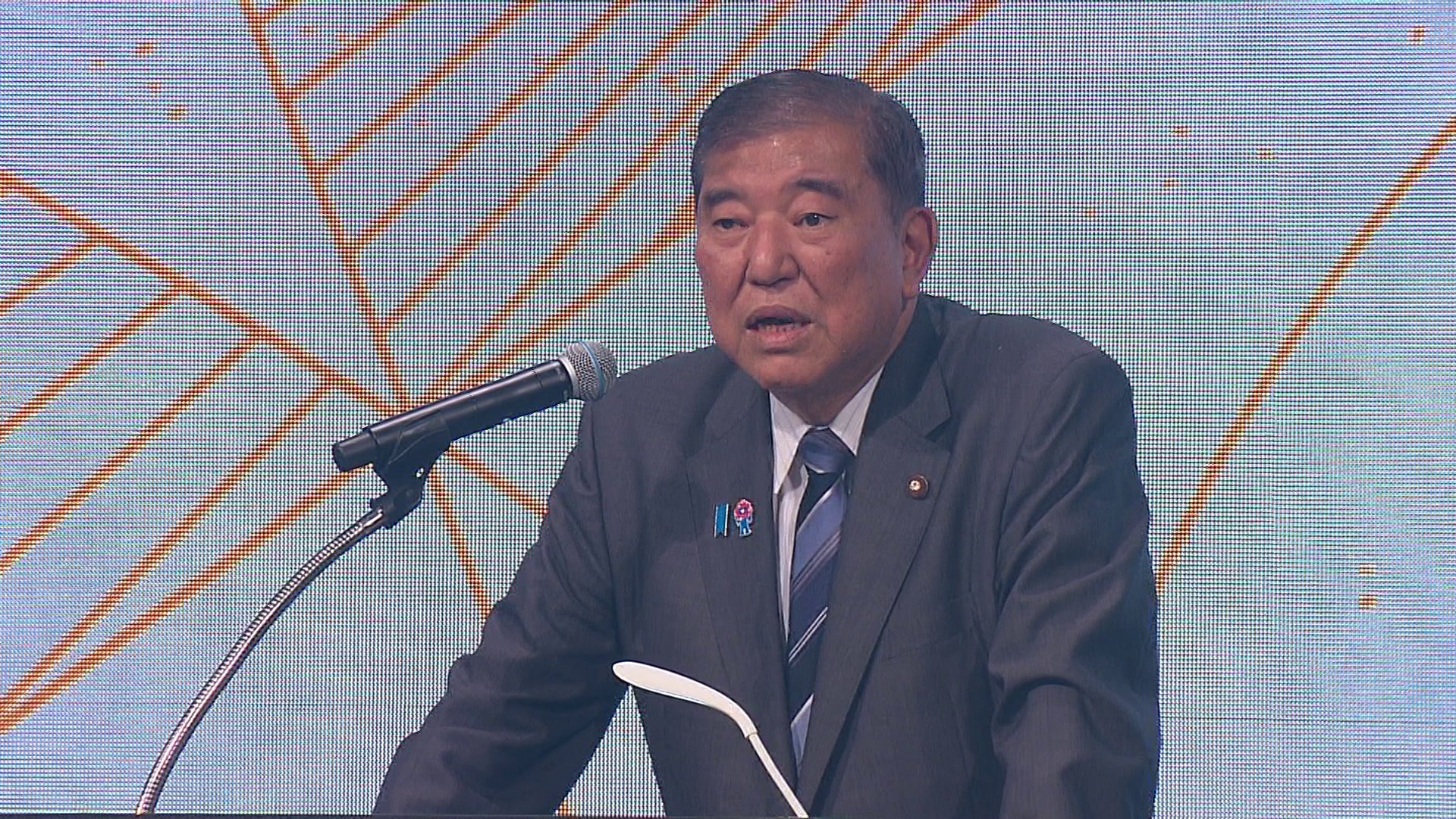
On August 25, 2025, Prime Minister Ishiba attended the WebX 2025, held in Tokyo.
The Prime Minister said in his address:
“Ladies and gentlemen, a very good morning to you all. I am ISHIBA Shigeru, Prime Minister of Japan. I would like to offer a few words on the occasion of WebX 2025.
I understand that this conference serves as an extremely important opportunity that brings together key Web 3.0 players to discuss the future of our society and industry, as well as to accelerate new business collaborations. I sincerely hope that many new Web 3.0 projects will emerge from today’s event.
Last week, we hosted TICAD 9, an international conference on African development, in Yokohama. We adopted the Yokohama Declaration and held talks with 34 African leaders, including a king, presidents, and prime ministers. It is quite a challenge to hold meetings with leaders from 34 countries. There are 54 countries in Africa, and among these countries, I met with those from 34. According to some estimates, African people will account for one-fourth of the global population in due course of time. Japan believes that how we support the development of the continent is highly important not only for Africa, but also for the world. One of the significant achievements of the latest TICAD is that Japan and Africa have agreed to work together to resolve various challenges facing the continent, and in doing so, both sides will achieve new growth. The conference has led to the signing of more than 300 cooperation documents. I exchanged views with some Japanese companies, and one of them is engaged in a business that collaborates with local startups to manufacture electric motorcycles, in addition to developing a network of battery exchange stations that will enable people to charge their bikes with electricity generated from renewable energy, mainly in parts of Kenya and Ethiopia where transportation is underdeveloped. As in the case of Africa, Japanese startups play an active role around the world. Although it may not sound like much, the number of Japanese startups has increased by 9,000, compared to four years ago. In other words, there were 16,000 startups in 2021, which have increased to 25,000 this year. Amid growing geopolitical uncertainty, the power of startups holds extreme importance in achieving new economic growth and solving social issues in Japan. On our part, we will enhance the Startup Development Five-year Plan and push ahead with investment support and regulatory reform efforts toward the development of new industries, such as support for digital and creative industries including Web 3.0 as well as the sophistication of manufacturing and agriculture, forestry, and fisheries with artificial intelligence (AI).
Our cabinet has been vigorously forging ahead with Regional Revitalization 2.0 by making full use of new technologies to maximize the potential of local areas, not only through physical infrastructure but also by leveraging intangible attractions that generate new flows of people. In this regard, we hold high expectations that Web 3.0 will make significant contributions to these efforts. Ama Town – Ama is written with the two kanji characters meaning ‘sea’ and ‘samurai’ – is located in the Oki Islands, Shimane Prefecture, and is renowned for regional revitalization. The town invites people, including those from outside the town, to ask for their suggestions on how to resolve challenges facing the municipality with Web 3.0, in return for local coins that can be used in the area. In addition, the ongoing Osaka-Kansai Expo features Web 3.0-based initiatives. The government, for its part, will create a safe and secure environment. I believe that the world is facing a once-in-a-century turning point. The 18th century saw the Industrial Revolution, during which the steam engine was invented, and I believe the steamship was developed in 1807. If I remember correctly, the steam engine itself was invented in 1764. I suppose that future history books will describe the 2020s as a period of a major industrial revolution.
On the other hand, as you all probably know, Japan’s population continues to decline. It is said that by 2100, the number of Japanese people will decline by half the current level. We must examine how we view this matter, and to consider what kind of country we should build amid a shrinking population. The primary reason why the depopulation has not stopped is the concentration of people here, in Tokyo. Both the marriage rate and birth rate are low in Tokyo. As more and more people flock here, this leads to a population decrease as a natural consequence. At such a major turning point in history, what do startups think about and what kind of Japan and world will they create? This is not just a domestic issue in Japan; it concerns how we will work with Africa, South America, and Asia. As we are living at such a historical turning point, we have high expectations that all those of you present today will play an active role, leading to successive Web 3.0 innovations. I look forward to your success. Thank you.”
