


[Provisional translation]
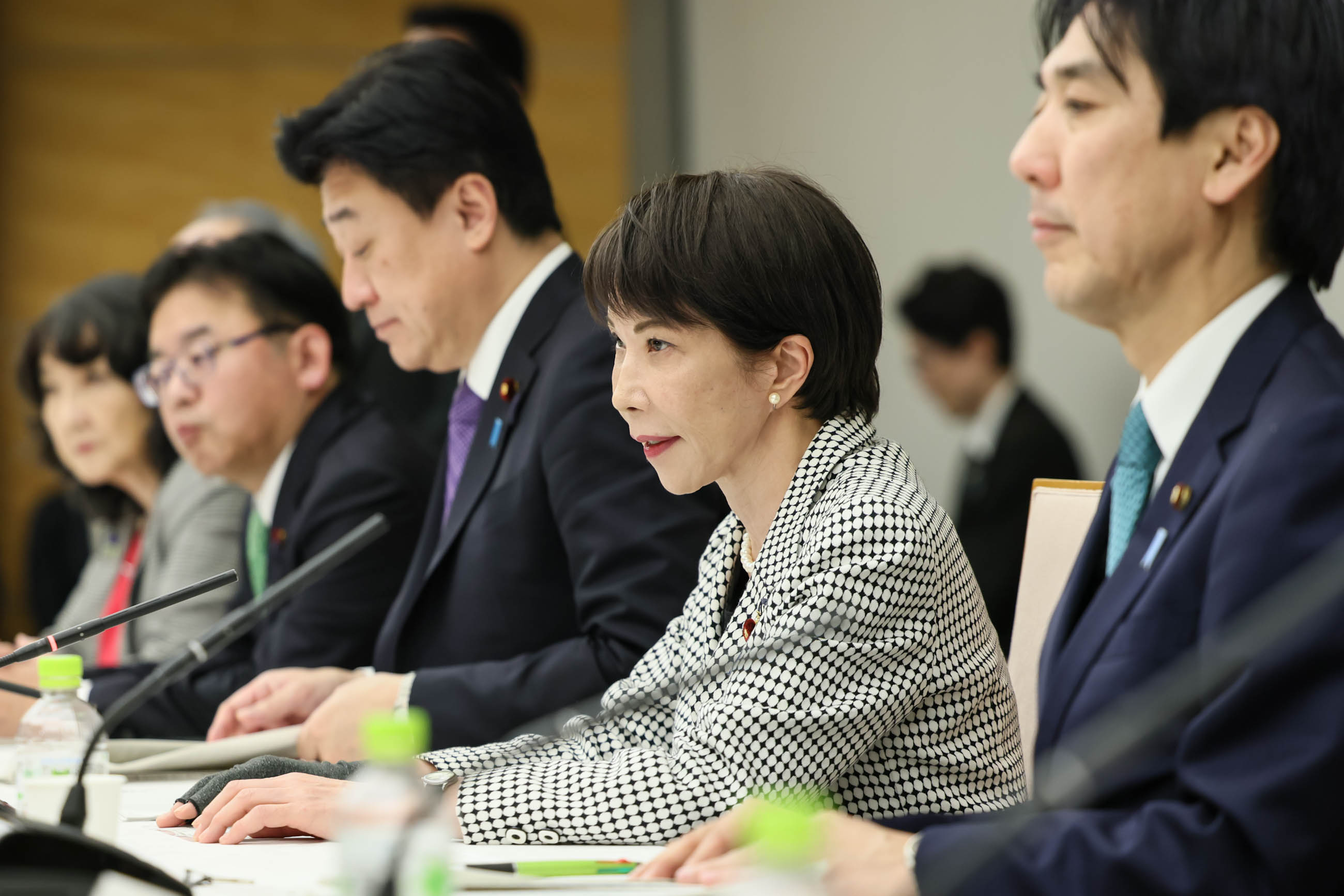
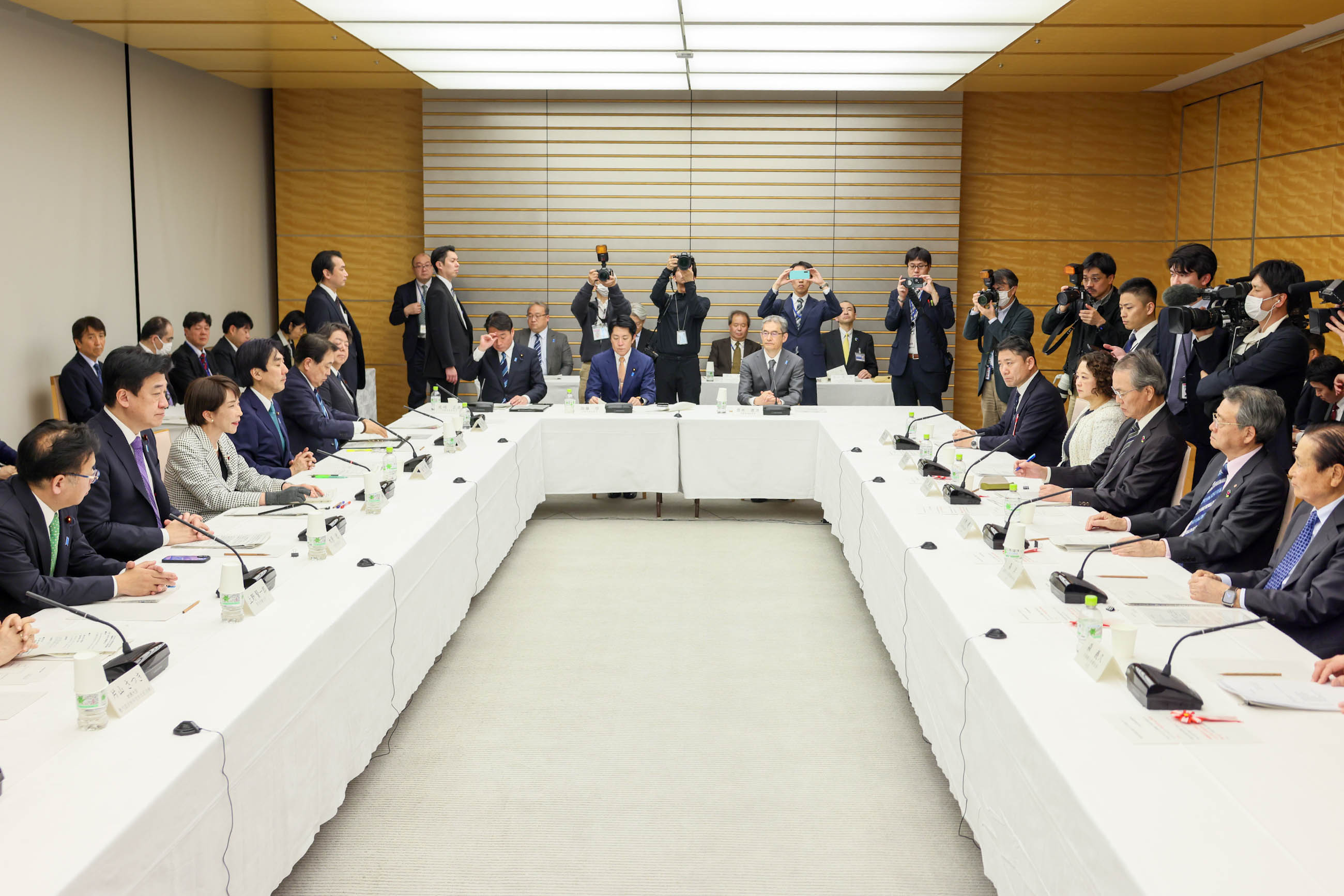
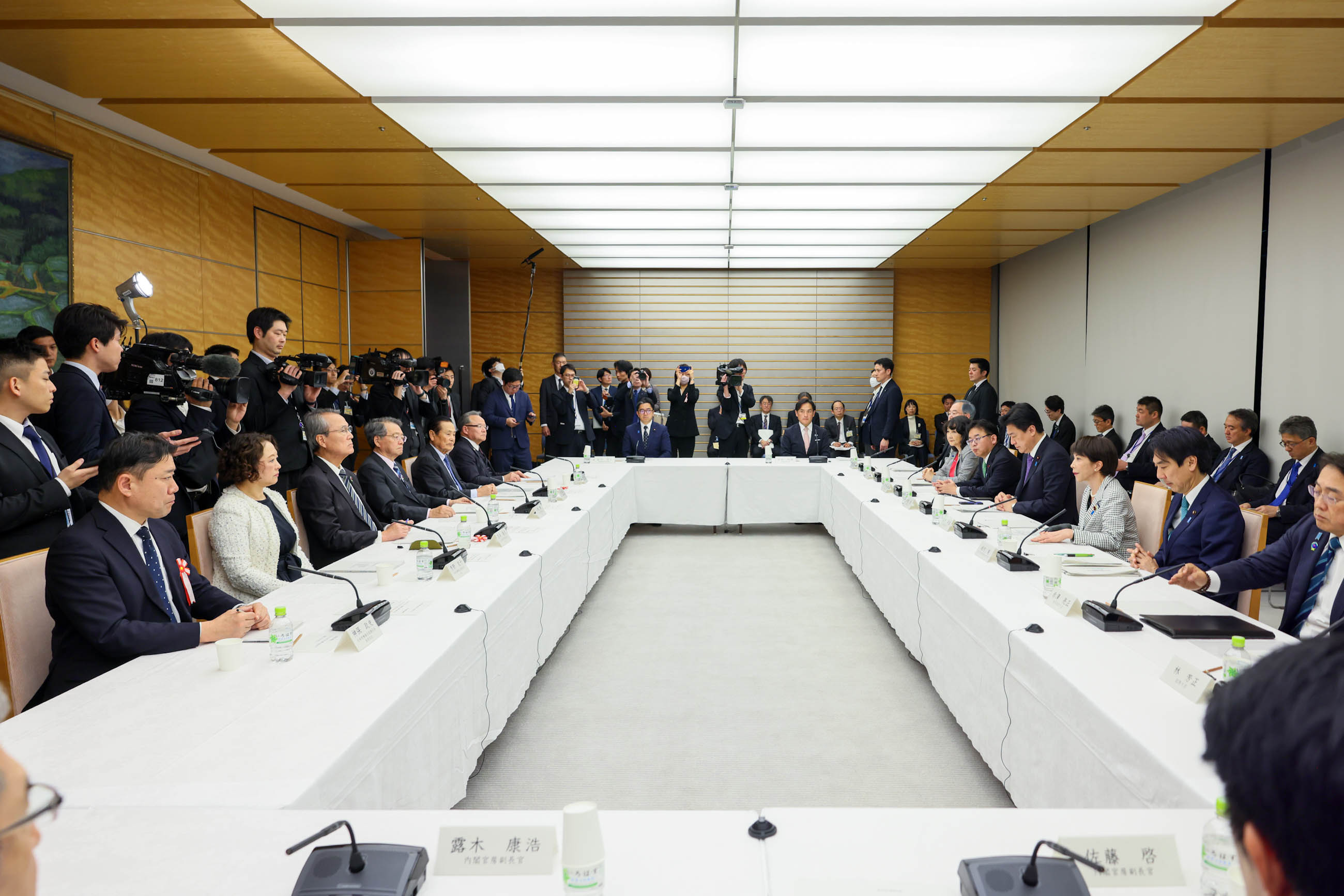
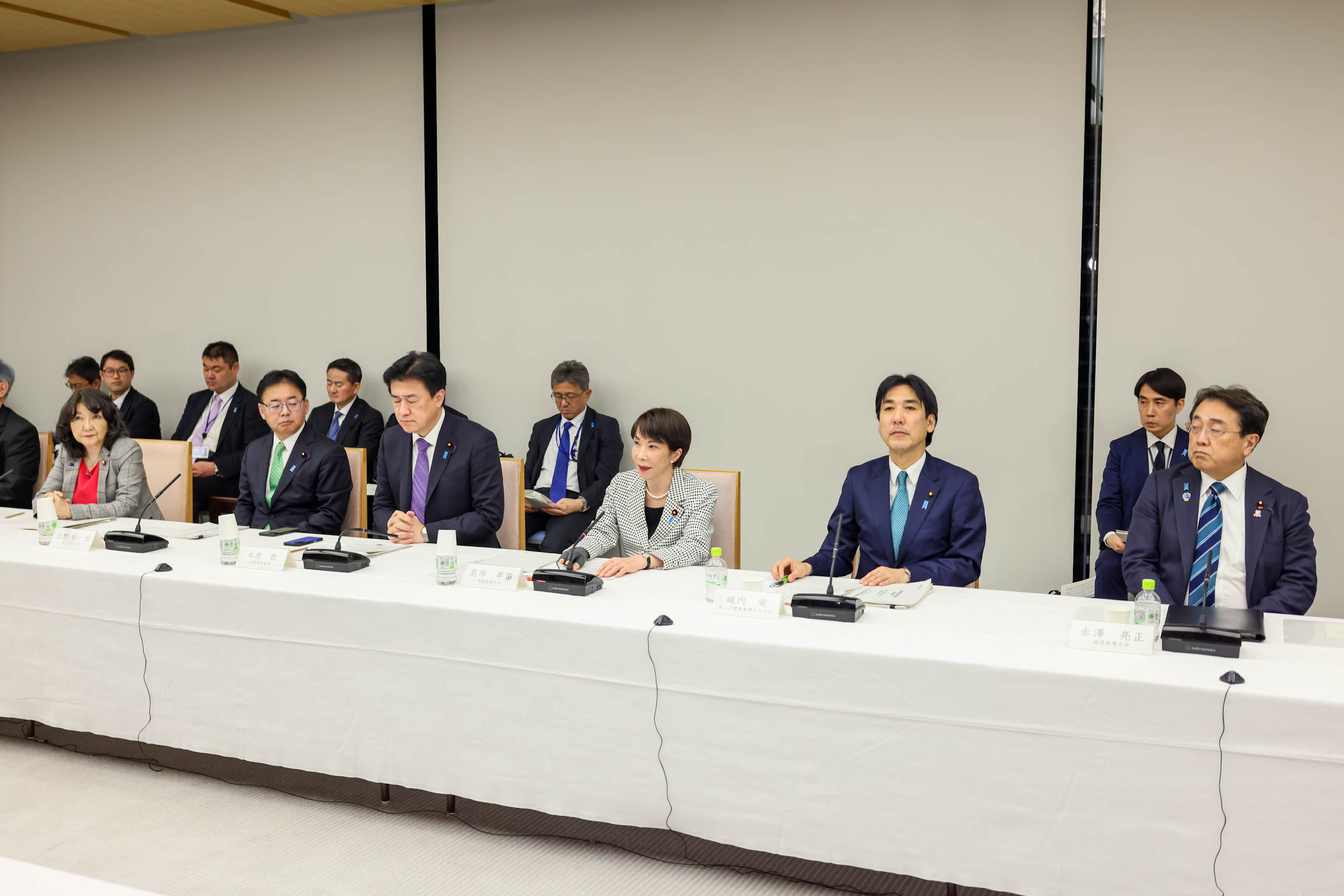
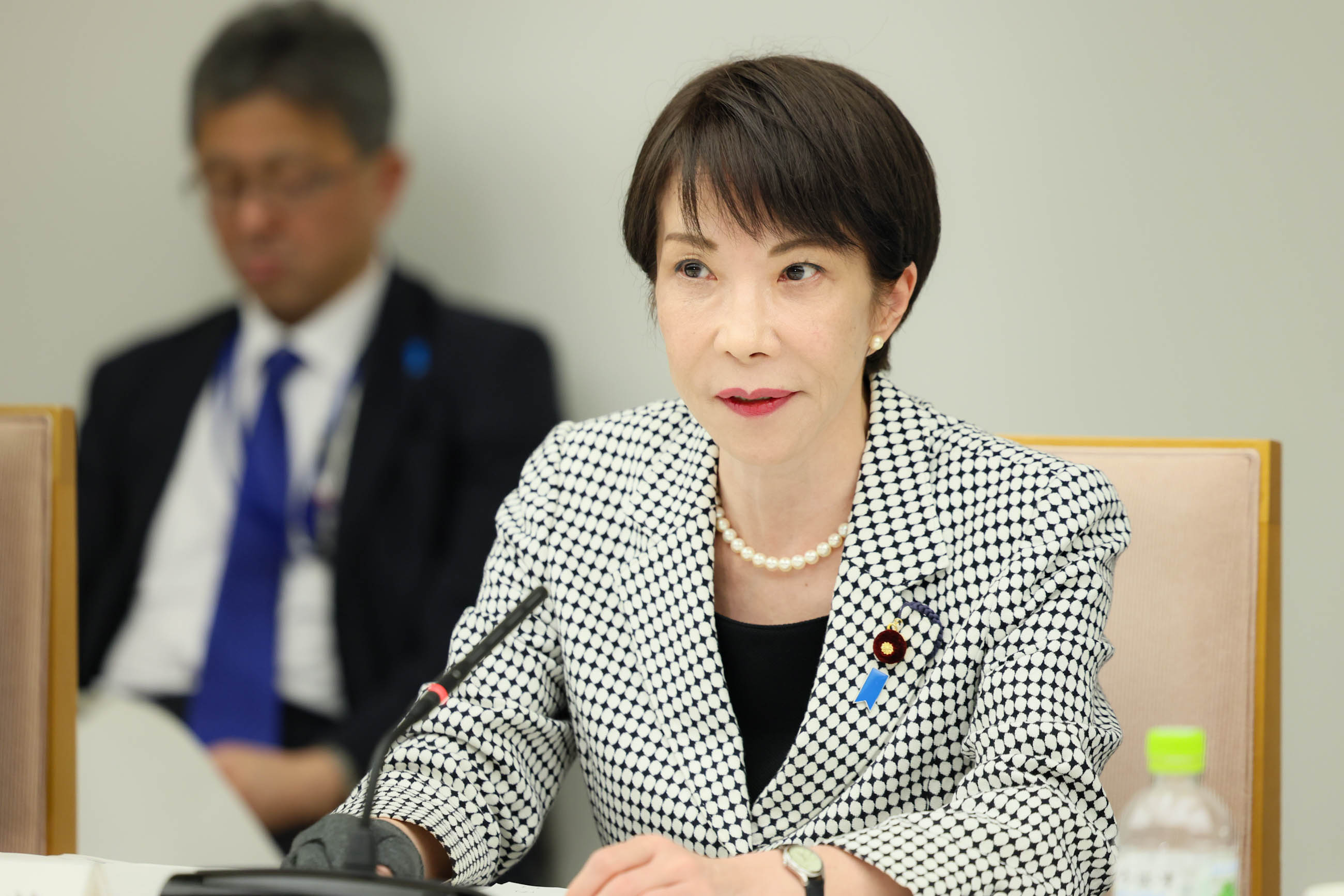
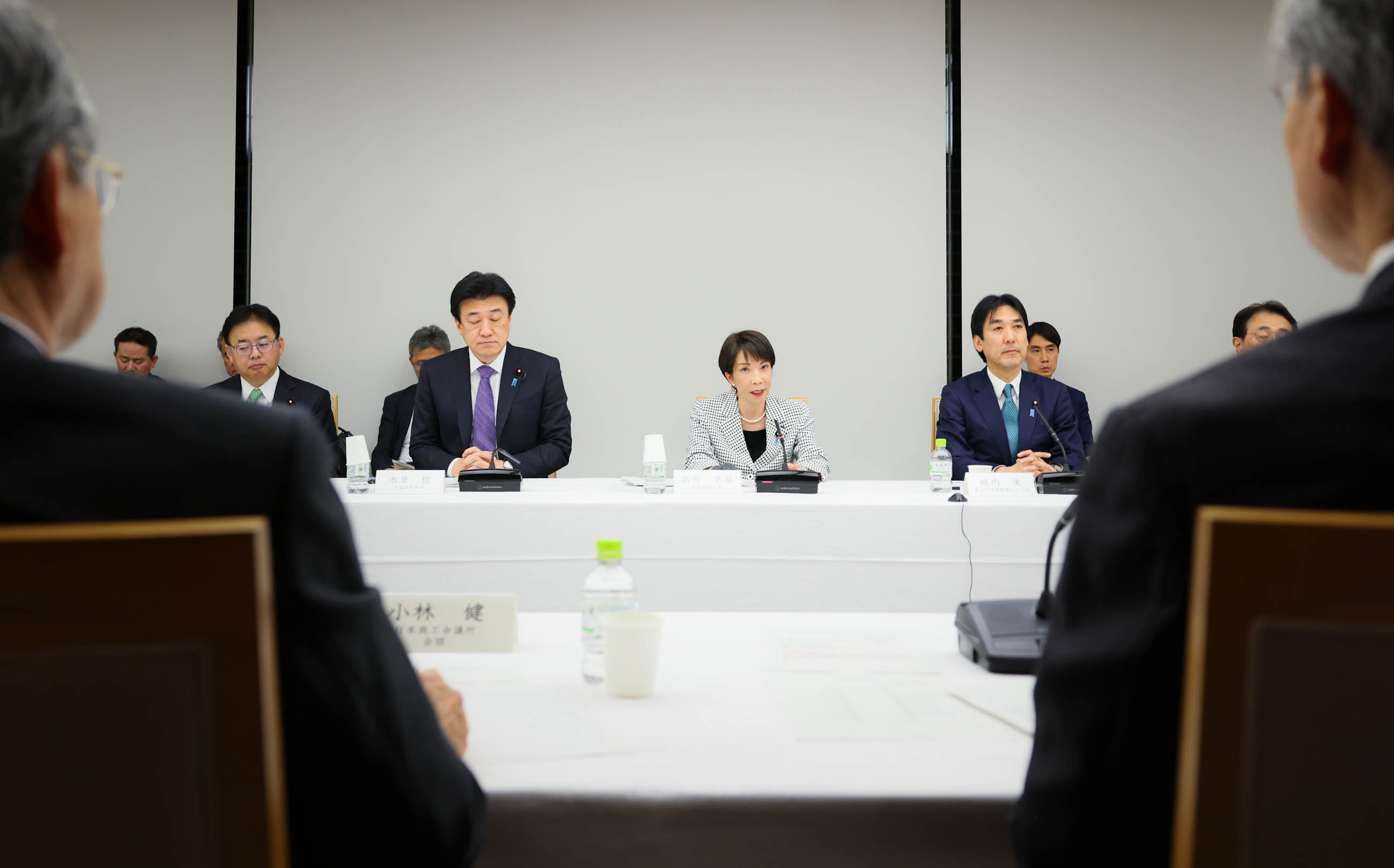
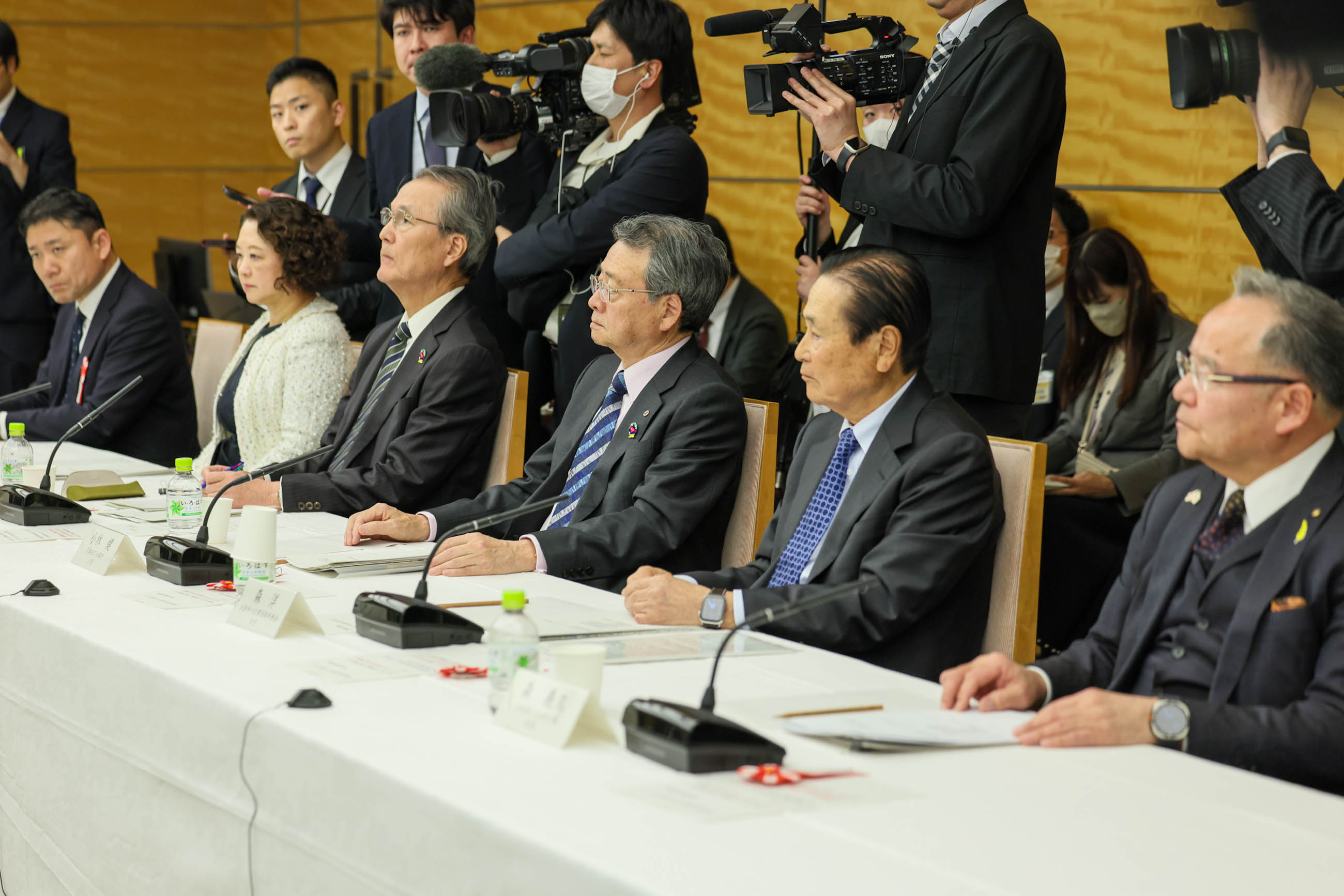
On March 23, 2026, Prime Minister Takaichi attended an exchange of views among the government, labor, and management at the Prime Minister’s Office.
At the meeting, an exchange of views was held with labor and management representatives toward wage negotiations of small and medium-sized enterprises (SMEs) and small-scale business operators going forward, as many employers give responses to pay increase requests made during the 2026 spring labor-management wage negotiations.
Following the exchange of views, the Prime Minister stated:
“Thank you for joining us again today. President Yoshino of RENGO (Japanese Trade Union Confederation) just reported that the first round of responses for this year’s spring labor-management negotiations showed an increase of 5.26 percent, on par with the levels recorded in the previous two years.
In addition, Chairman Tsutsui of Keidanren (Japan Business Federation) reported that, as a result of their efforts to further establish a strong momentum for wage increases as a ‘social responsibility,’ many companies provided responses with a high level of wage hikes again this year.
At the exchange of views among the government, labor, and management held last November, we gained understanding for the Takaichi Cabinet’s policy that ‘the Government will not simply leave wage increases to businesses, but will work to create an environment that enables sustained wage growth.’ I believe that our efforts to support businesses through economic measures and the supplementary budget are beginning to bear fruit.
Moving forward, it is important to ensure that this momentum for wage growth will spread widely to SMEs and small-scale business operators in regional areas, not just to large enterprises.
Today, representatives from SME organizations spoke about the current situation in which they are being compelled to implement defensive wage increases in a challenging environment, the need to further enhance support for price pass-through, including in public procurement, and productivity improvements, and their concerns regarding the impact of the situation in the Middle East on the Japanese economy.
In order to ensure that the encouraging momentum of wage increases in this spring’s labor-management negotiations will extend to SMEs and small-scale business operators, we will further promote thorough implementation of price pass-through and fair business practices, starting with the strict enforcement of the Proper Transactions Act (Act on Preventing Delay in Payment to Small and Medium-Sized Entrusted Business Operators in Relation to Manufacturing Consignment), which came into force this January.
Furthermore, we will fundamentally strengthen the ‘earning power’ of SMEs and small-scale business operators. Specifically, we will provide hands-on, ongoing support initiated from the government side and assistance to enhance productivity and reduce labor requirements as well as improve the environment so as to facilitate business succession and M&A, along with thorough implementation of appropriate price pass-through and fair business practices.
At the same time, the Takaichi Cabinet will ensure predictability for business operators under the policy of ‘responsible and proactive public finances.’ With a view to encouraging corporate research and development and capital investments, we will enable policy support through the use of budgets providing fiscal outlays across multiple fiscal years and funds.
Moreover, we will make a clean break from our current budget formulation process in which it is assumed that a supplementary budget will be compiled each fiscal year; we will instead allocate all necessary funds within the initial budget, to the extent possible.
By revising these budget formulation policies, we will enhance predictability and create an environment where SMEs and small-scale business operators can actively engage in growth investments with confidence.
On top of that, we will examine how we can expand and enhance policies aimed at fostering an enabling environment for wage increases and compile Japan’s Growth Strategy this summer. With regard to the concerns about the impact of the Middle East situation, to ensure that there are no disruptions to the supply of petroleum products such as gasoline, we began releasing oil stockpiles on March 16 to secure the necessary volume for Japan as a whole.
Additionally, on March 19, we began providing subsidies to curb the prices of petroleum products such as diesel, heavy oil, and kerosene, in addition to gasoline. As for such petroleum-related products as naphtha and helium, we are striving to secure alternative sources of supply from outside the Middle East; therefore, we do not expect immediate supply issues.
Tomorrow, we will launch a Ministerial Meeting on the Situation in the Middle East to closely monitor the impact of the situation on the economy and carefully address the concerns expressed by those present here today.
On its part, the Government will make every effort to create an environment conducive to wage increases. As such, we sincerely ask for your cooperation in realizing sustained wage increases that outpace inflation. Thank you very much for today.”